Architecture
oblako is built on one idea: real behavior, simulated topology. Where a mock returns canned API responses, oblako runs the actual engine an AWS service is built on and wires it into an AWS-shaped local topology, so your code, your SQL, and your models all run for real.
Every service maps 1:1 to boto3
Each oblako service is the local counterpart of an AWS service, reached through
the same boto3 client you’d use in the cloud. There is no oblako-specific
SDK to learn:
from oblako.services import Oblako

o = Oblako()
o.s3.get_client()         # boto3.client("s3")        -> S3Proxy
o.dynamodb.get_client()   # boto3.client("dynamodb")  -> DynamoDB Local
o.redshift.get_client()   # boto3.client("redshift")  -> moto control plane
o.redshift.connect()      # psycopg2 / redshift-connector -> the real engine
In a notebook or with the endpoint env vars set, unmodified boto3.client("s3")
transparently hits the local service, no endpoint_url, no config.
Real engines, not mocks
oblako prefers running the real thing over emulating it:
S3 → S3Proxy over the local filesystem
DynamoDB → Amazon’s DynamoDB Local
Redshift → a PostgreSQL 16 image that impersonates Redshift (accepts
redshift-connectornatively, reportsserver_version 8.0.2)RDS / Aurora → real PostgreSQL: one container per standalone DB instance (read replicas are streaming standbys), behind an RDS API proxy over moto
Step Functions → Amazon’s
aws-stepfunctions-localBedrock → Ollama (or OpenRouter for real frontier models)
SageMaker → oblako’s own engine, running jobs and endpoints in real Docker containers (plus account-free stubs for the SDK v3 local modes)
Control planes that have no local engine (cluster/instance metadata for
Redshift, RDS, IAM, EC2, Lambda) are served by moto, so describe_* calls
behave; the data plane runs against the real engine.
The three families oblako covers, each service on its own fixed local port:
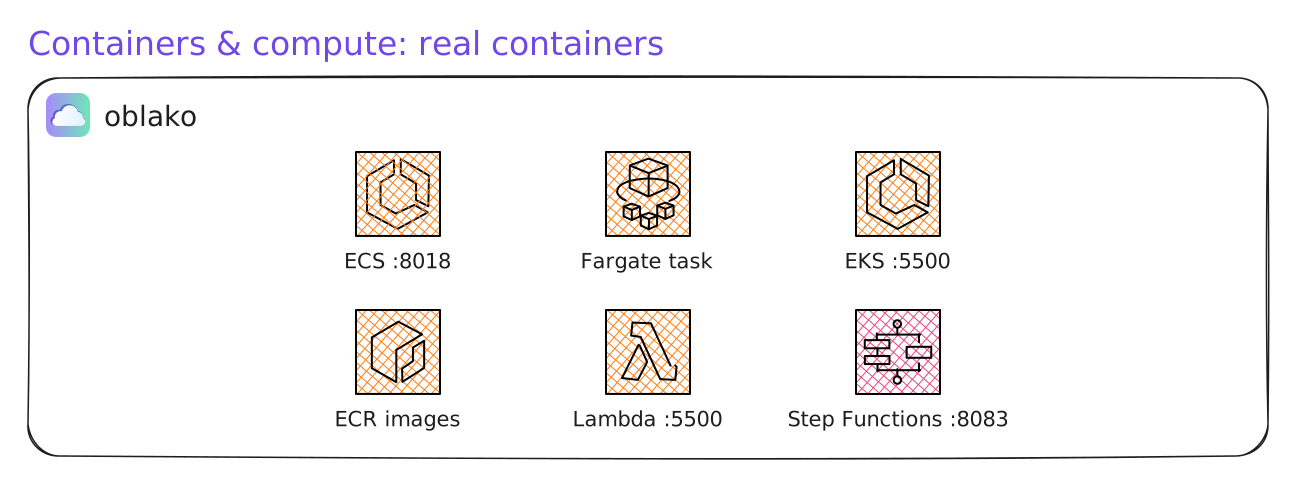
Containers & compute: real containers (ECS, Fargate, EKS, ECR, Lambda, Step Functions).
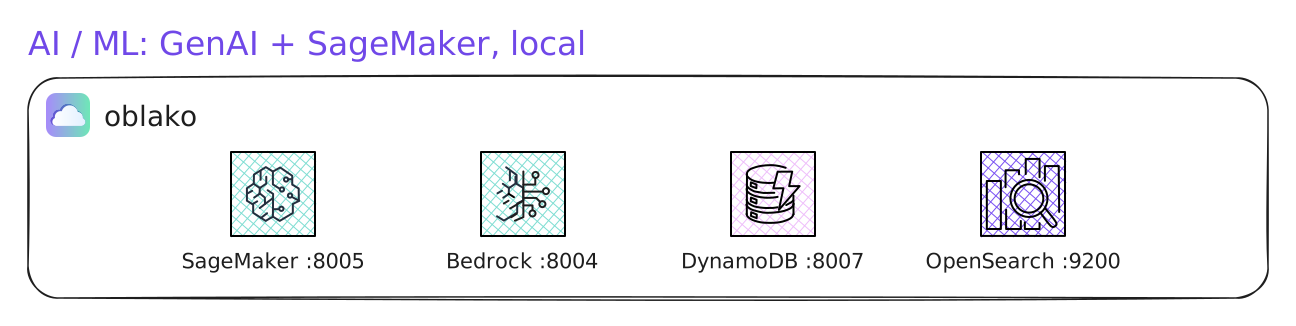
AI / ML: SageMaker in local Docker, Bedrock via Ollama, DynamoDB vector search, OpenSearch.
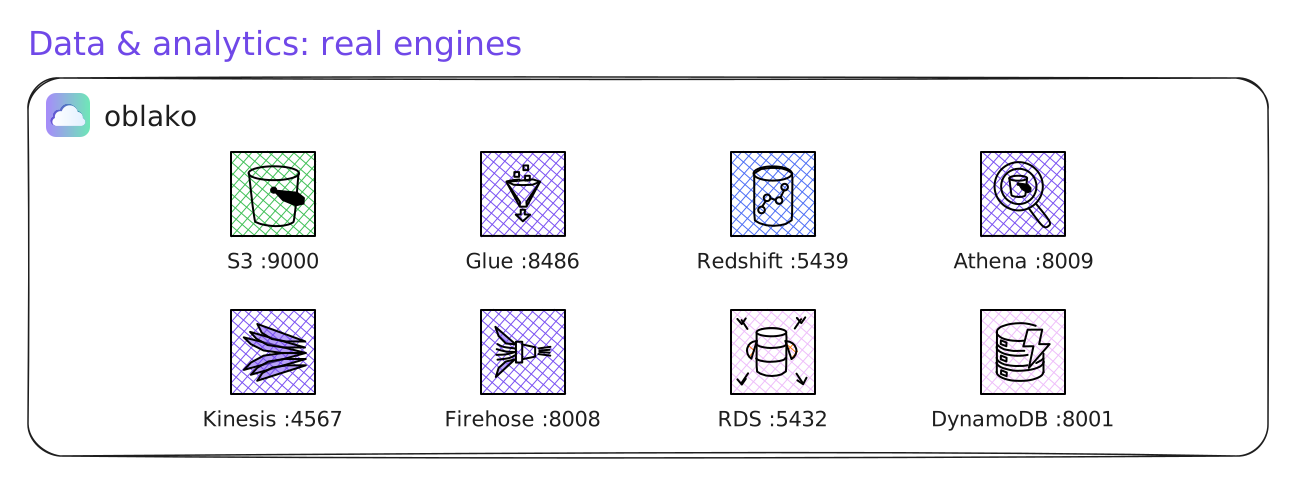
Data & analytics: real engines (S3, Glue, Redshift, Athena, Kinesis, Firehose, RDS, DynamoDB).
How your code reaches a service
AWS_ENDPOINT_URL_* (or an explicit endpoint_url=) points boto3 at
localhost:PORT, and the service publishes that port. One client, one fixed local
port, one real engine. Behind the port is one of four things:
The engine itself, when it already speaks the AWS API: DynamoDB Local on :8001, kinesalite on :4567.
A thin front that adds what the engine lacks. S3’s :9000 is a stock nginx: it passes ordinary requests to S3Proxy on :9001, sends tagging and Inventory to the S3 extensions engine on :8020, and logs completed writes so event notifications fire. Redshift’s :5439 is a wire proxy inside the Redshift image: it terminates TLS, rewrites Redshift-only SQL (
DISTKEY,SORTKEY,SUPERnavigation, …) and bridgesCOPY/UNLOADto S3, in front of PostgreSQL.A Python engine of oblako’s own, for APIs no engine speaks: Athena (:8009, queries run on Trino), the Glue Data Catalog (:8486), S3 Tables, S3 Vectors, Firehose, EventBridge and the Data APIs.
moto (:5500), for control planes with no engine behind them.
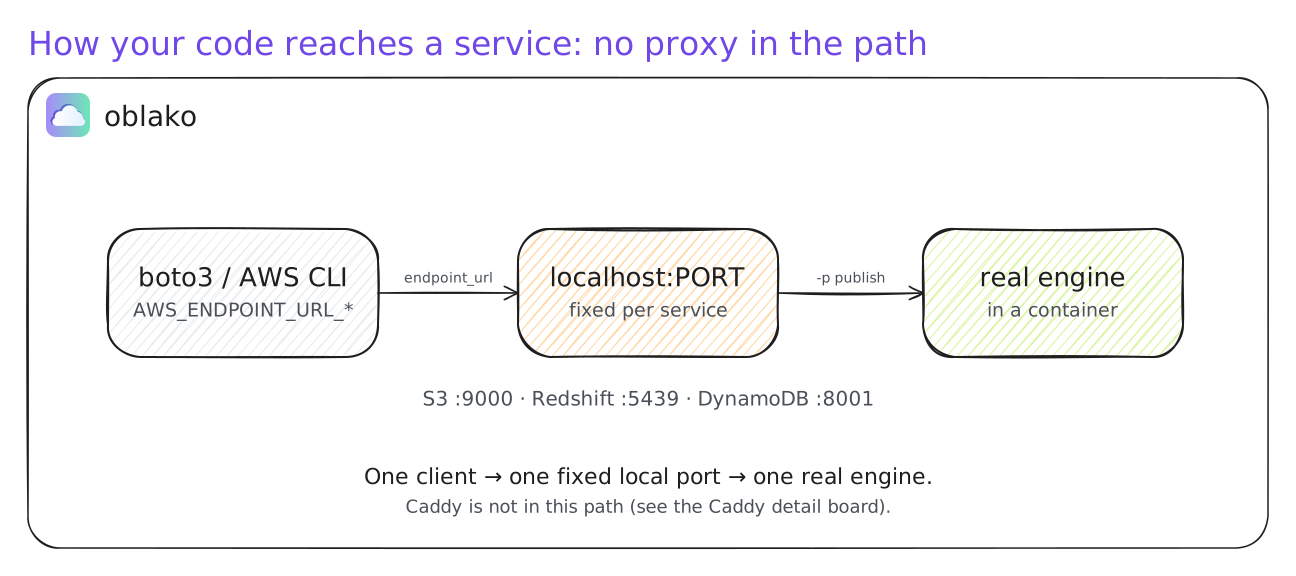
boto3 / AWS CLI → localhost:PORT → the real engine (directly for most services).
Caddy sits beside that path, not in front of it, for two specific jobs:
Vanity hostnames: it gives the local MLflow an AWS-shaped URL (
mlflow-oblako.<account>.<region>.experiments.sagemaker.aws), so a SageMaker-managed tracking server and the local one look identical to your code.Load balancing: each ELBv2 Application Load Balancer is its own Caddy container, round-robining across its registered targets; the LB’s
DNSNameresolves tolocalhost:<listener-port>.
Caddy reaches upstreams on the host via the host.docker.internal gateway alias
(the vmnet gateway on the Apple container backend), independent of any Docker
network. Ordinary service traffic (S3, Redshift, DynamoDB, …) never passes through
Caddy.
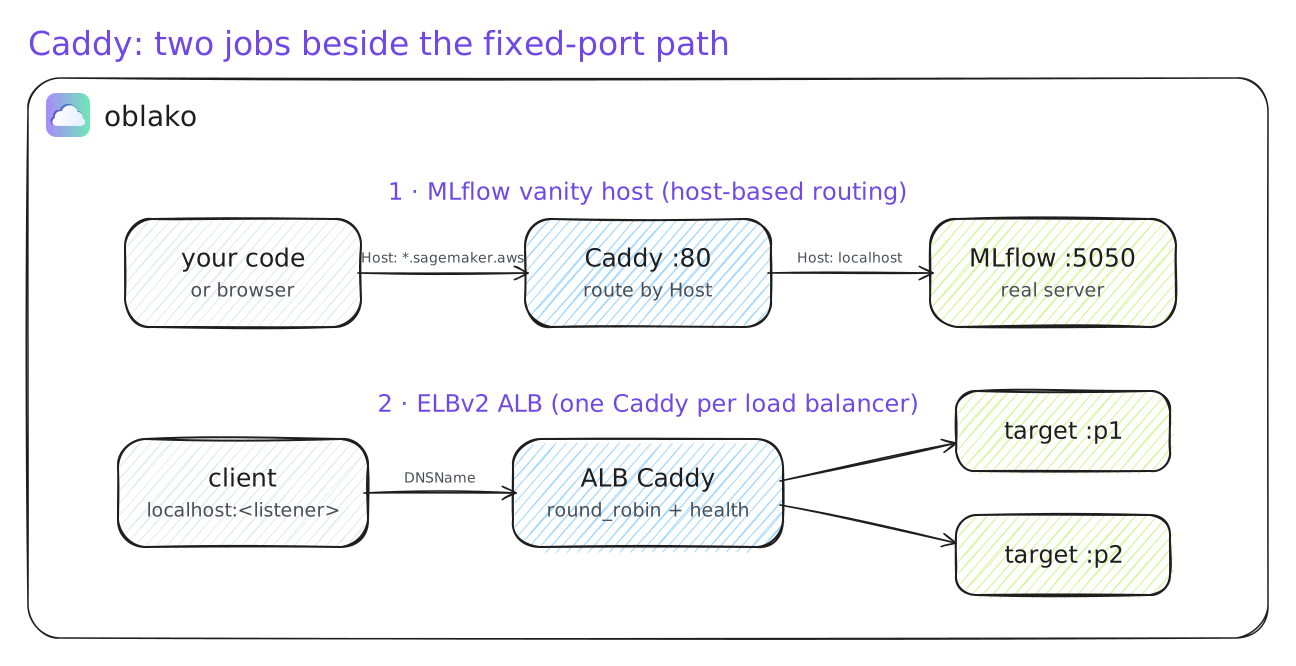
Caddy’s two jobs beside the fixed-port path: the MLflow vanity host, and one Caddy per ELBv2 load balancer.
What this buys you
Your SQL actually executes (dbt-redshift runs;
SELECTreturns real rows).Your boto3 code is unchanged between local and cloud.
You can develop and test end-to-end offline.
See Services for what each service supports and where it diverges
from AWS, and the Python API for the oblako.services reference.